
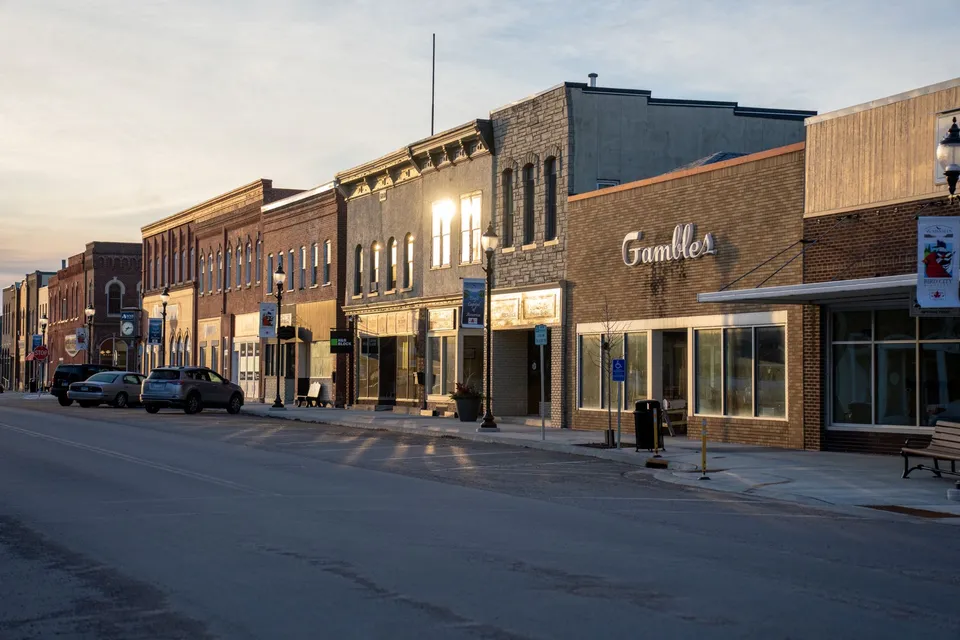
A morning errand in Park Rapids rarely stays in one lane for long. A stop downtown can turn into a courthouse visit, a trailhead walk, a county bus question, or a quick check on a city service. That is not a sign of sprawl; it is the way a small county seat works when civic services, recreation, and daily errands overlap. Hubbard County chose Park Rapids as its seat in 1883, and that decision still shapes how people move through town today. The county courthouse remains a visible civic anchor, and the local newspaper record stretches back through the Park Rapids Enterprise’s long publication history, which gives the town a kind of public memory that many smaller places never build.
The county seat sets the rhythm
That county-seat identity matters because it explains why Park Rapids feels larger than its population suggests. The city is not just a place to shop or pass through on the way to the lakes. It is where county business, school connections, and public services tend to converge. In practical terms, that means residents are often making decisions across several layers at once: city, county, and regional. The courthouse is part of that daily geography, not an occasional destination. So is the broader civic complex around it. When people describe Park Rapids as a hub, they are not speaking loosely; they are describing a town that was built into a regional center from the start.
The same pattern shows up in how people get around. Heartland Express says it provides curb-to-curb bus service to Park Rapids and Bemidji and can get riders around the City of Park Rapids itself. It also works with veterans services, community education, the Development Achievement Center, social services, Medicaid, and other partners. That tells a useful local story: mobility here is not just about owning a car or driving the same route every day. It is part of a countywide support system, and it is tied to agencies as much as to roads. Even so, the service is practical rather than magical; riders still need to check schedules and stop coverage before depending on it for work, appointments, or errands.
Trails, parks, and the river corridor
If the courthouse explains one side of Park Rapids, the Fish Hook River explains another. Red Bridge Park sits on Beach Road, covers just one acre, connects by the red bridge to Heartland Park, and serves as a trailhead for the Heartland Trail. That small set of facts says a lot. The river corridor is not only scenic; it is functional. It is where people enter the trail system, cross between parks, and gather for the kinds of moments that make a town feel lived in instead of merely mapped. A tiny park can do a surprising amount of work when it sits at the junction of water, walking, and community use.
The county’s park system expands that everyday geography well beyond one bridge. Hubbard County says it maintains public boat accesses and beaches at Stony Lake, the Fish Hook River at Heartland Park, Garfield Lake near Laporte, and Paine Lake at Lake George Community Park. For residents and visitors, that means recreation is spread out across the map instead of concentrated in a single municipal park. A family might swim in one place, launch a boat in another, and pick up a trail walk somewhere else. The result is a region that feels connected by access points rather than by one central waterfront.
That same connected feeling reaches into the larger Heartland Lakes region. Park Rapids is part of a trail-and-lakes network that includes the Heartland Trail, the Lake Country Scenic Byway, and other regional routes. Itasca State Park is an important anchor in that broader landscape, but it should not be mistaken for Park Rapids itself. The useful local distinction is that the city sits near major outdoor destinations without becoming them. That difference helps explain why the town serves both residents and visitors: one group comes for daily life, the other for access to the larger outdoors network that radiates from it.
Shared services keep the town practical
Park Rapids also works because many of its everyday services are shared rather than duplicated. The city website routes residents to KRLS for library access instead of presenting a city-run library department, and it links to community education and school information as part of its civic web. That may sound like a small administrative detail, but it reveals something important about the area: learning, reading, and public information are regional tasks here. They are not always built inside one municipal box. The same is true of utilities. Park Rapids reports 1,370 municipal water connections and 1,270 sewer connections, along with water towers, wells, and lift stations that keep city living functioning year-round.
The city’s airport adds another layer to that practical picture. Its airport page says there are 44 T-hangars available for rent and a second-floor terminal meeting room available for hourly or day use. That does not make the airport glamorous, but it does make it useful. It is a working piece of local infrastructure, one more example of how Park Rapids blends transportation, meeting space, and community function in the same place. In a small hub, a facility rarely serves just one purpose.
What newcomers often miss
People arriving in Park Rapids often notice the lakes or the downtown first. What they sometimes miss is how regulated and structured ordinary life is behind the scenes. The city’s rental forms page lists rental licensing, inspections, safety guidelines, and short-term rental forms. The planning office says development plan review generally takes about 60 to 90 days, while many home occupations require conditional-use review that can take 30 to 60 days. For newcomers, that means housing changes, home businesses, and remodeling plans should be treated as real projects, not casual assumptions. The town is welcoming, but it is also organized.
That is the deeper answer to what makes Park Rapids feel the way it does. It is not a town where everything points to one downtown block, and it is not just a summer stop for trail users. It is a county seat, a trailhead, a transit stop, a service center, and a collection of overlapping public systems. Once you see that pattern, a simple day in town looks different. A coffee run, a courthouse errand, a trail walk, and a bus stop all start to look like pieces of the same local map. If you are new to the area, the best next step is simple: check the city and county pages before you assume a place, a route, or a service works the way it would in a bigger town.